Planning
The Meanders began with listening to the land through the summer of 2025. What direction does the wind blow? What birds, insects, and wildlife are around? Where does water pool? What does Nature want the to become?
At the same time, I considered what do we humans (who are also Nature) want the land to become? We wanted:
- mow less
- fruit to eat
- path to walk
- habitat for flying beings
- beauty to enjoy
A vision was forming of a prairie orchard, a place of productive restoration, on the three acres between the road and our home.
The previous homeowners mowed this part of the property several times a year, and prior to 1997 when the home was built, it was farmed, likely an annual crop judging by the residual row ruts. Presettlement, the land we’re now stewarding was likely one of Ohio’s rarer land types: prairie.

I laid out a plan for The Meanders to be a winding path lined with trees through a prairie restoration. The trees would be selected for their fruits, habitat, or beauty, and the prairie would evolve through removal of unwanteds and planting of native species.
Site Prep
The first step towards a prairie orchard was to consider what to do with the existing ‘diversified lawn’. While an unkempt lawn does serve as a cover crop of sorts, preventing eroison and holding nutrients in place, it also fosters potential weed in the seedbed and invasive plants that can tolerate mowing (hello multiflora rose).
I skimmed prairie restoration books from the library and searched extension and conservation resources for a solution to the lawn removal problem. Solarizing (tarping) or sod removal isn’t practical at this scale. Tilling would expose weed seeds while adding to the compaction issues. Herbicides, which I avoid because of deliterious side effects, would need to be applied multiple times, and we don’t have a means of spraying anyways. What’s left? Fire, the original prairie management tool.
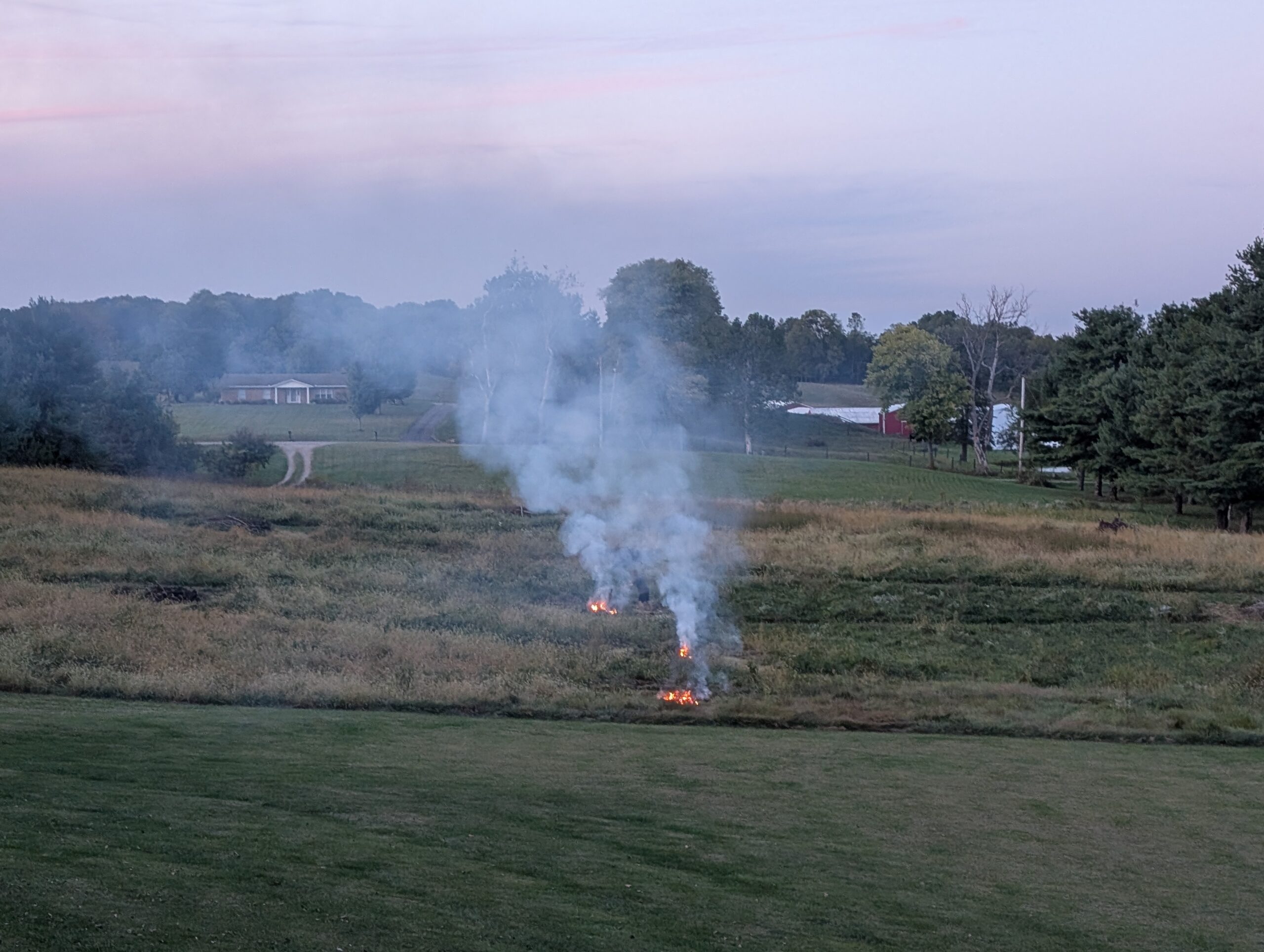
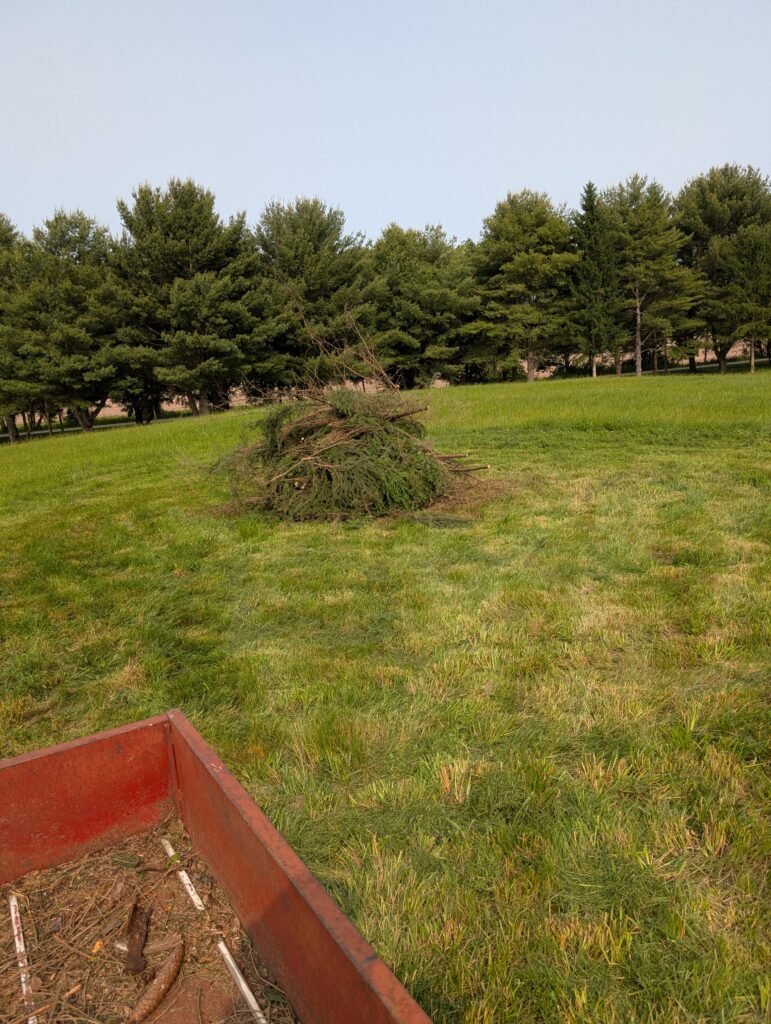
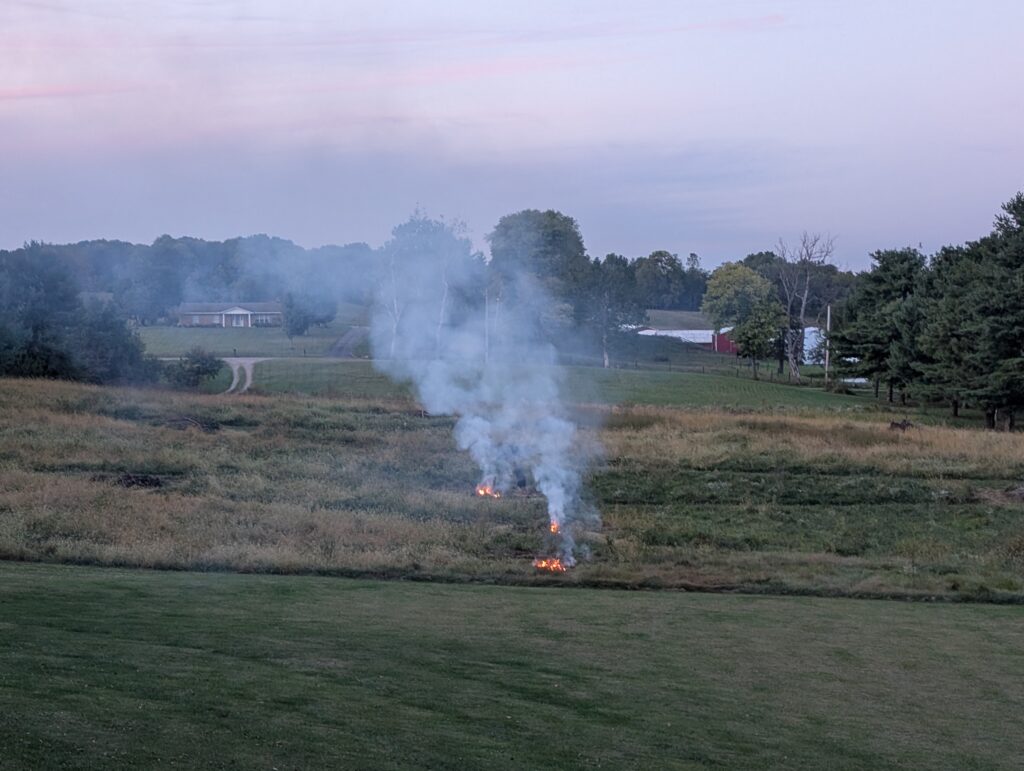
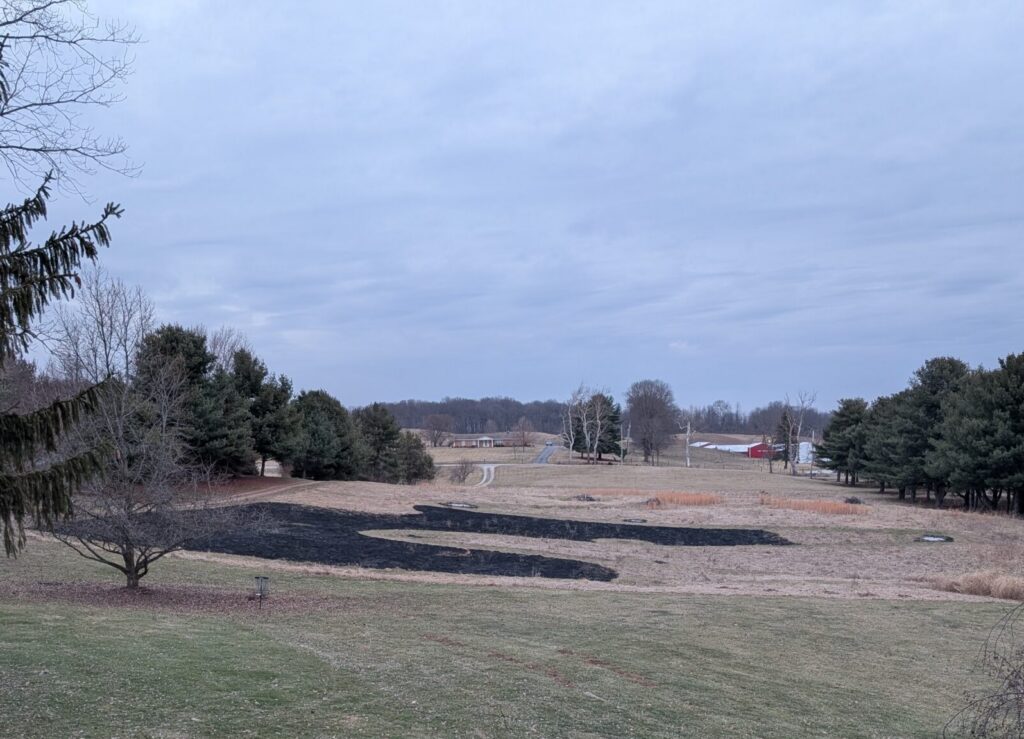
We started by mowing the path and piling trimmings from the conifers lining the driveway in the areas planned for spring trees. The trimmings seasoned over the fall and winter, and then Chris burned the piles a few at a time.

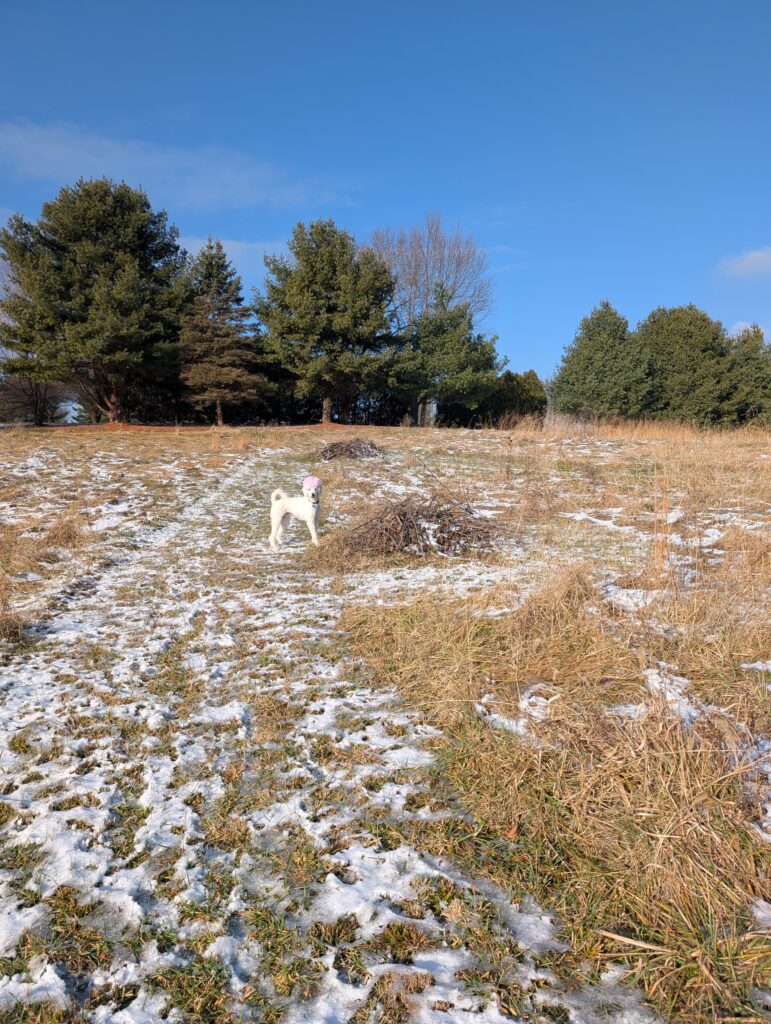
Only once did the wind pick up and a fire jump from a pile to the surrounding winter dried grass. The mowed paths served as a fire break and after a harrowing twenty minutes of digging further breaks with a shovel, the fire was contained. Fire might be the cheapest way to clear a large area but it’s also the riskiest. Lesson learned.

Next up is the fun stuff – species selection and planting!