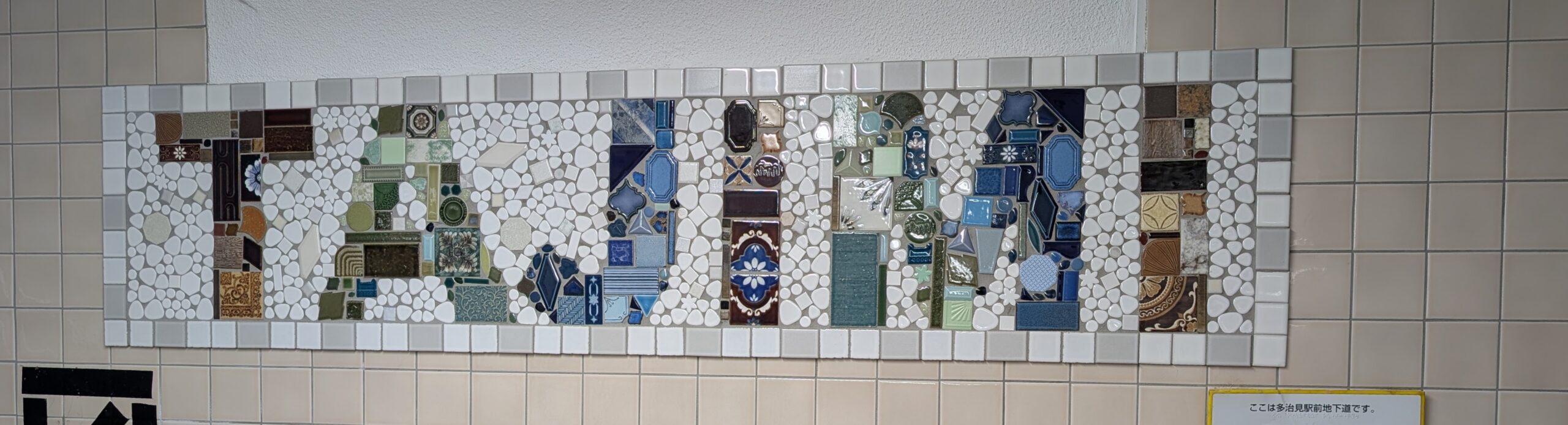
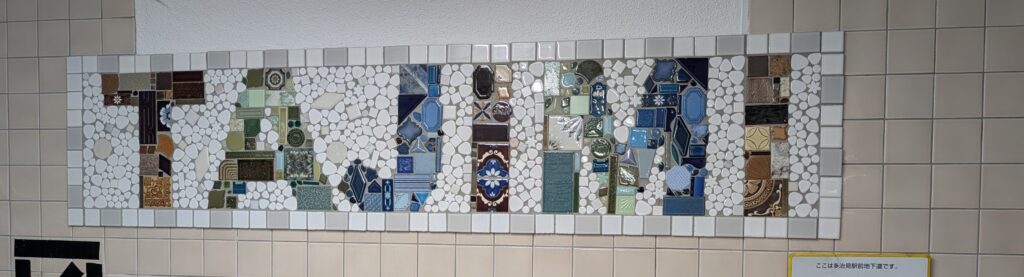
In the summer of 2026, I traveled to Japan to visit Lil while they studied Japanese language at Chubu University. I stayed in nearby Tajimi, a small countryside town in the Gifu prefecture (Mino is the ancient name for the region), known for ceramics.
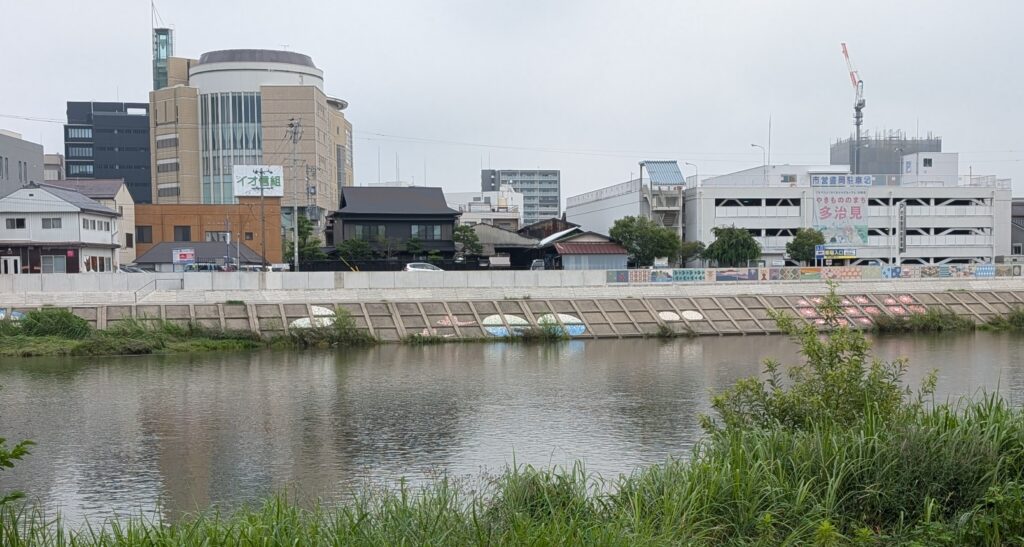
To say that ceramics are everywhere in Tajimi is not an overstatement. Mosaic installations provide way finding and decoration. Modern and traditional ceramic sculptures are placed on streets, fountains, and shop entrances. Over five days, I visited an astounding number of ceramic museums and galleries in a five mile radius – and there were more I could not fit into my itinerary!
Most museums were delightfully nearly empty when I visited on weekdays in the summer. Admission cost no more than a few hundred yen (a few dollars) and many offered free printed English guides, useful as reference material both during the visit and upon return to the US.
Tajimi Ceramics Travelogue
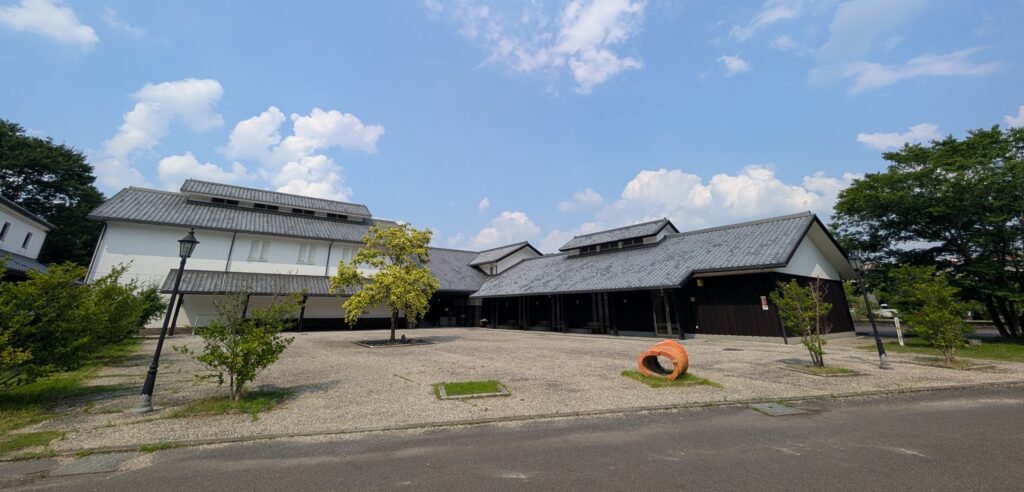
1. The Inchinokura Sakazuki Art Museum features sakazuki, a small, saucer-shaped sake cup form traditionally used for celebrations. The first floor galleries (no pictures allowed) displayed over 1500 sakazuki. The museum’s collection includes works by Kato Guseuke (1837-1915), famed for fine, single-horse-hair-brushed cobalt illustrations series of cups, examples of classic motifs and techniques, and a selection of modern export, military, and drinking game styles. A small second floor gallery houses their Great Master Ceramists Gallery, a good introduction to the different styles of revered Mino ware artists.
Favorite piece: a small shallow sake cup with delicate grass and firefly design, enhanced by the firefly appearing to light up through lithopane-esque thinning of the porcelain at the tail.
If you visit: The Inchinokura Sakazuki Art Museum also houses as large shop with local artist works, the best variety of artist-made works in the area.
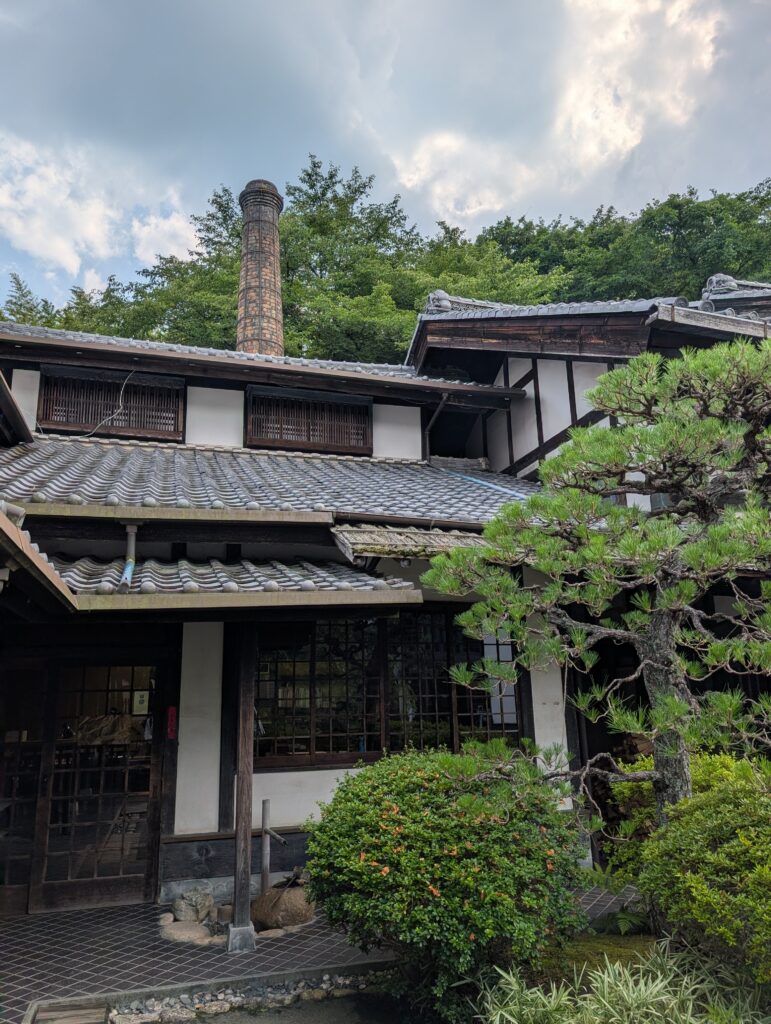
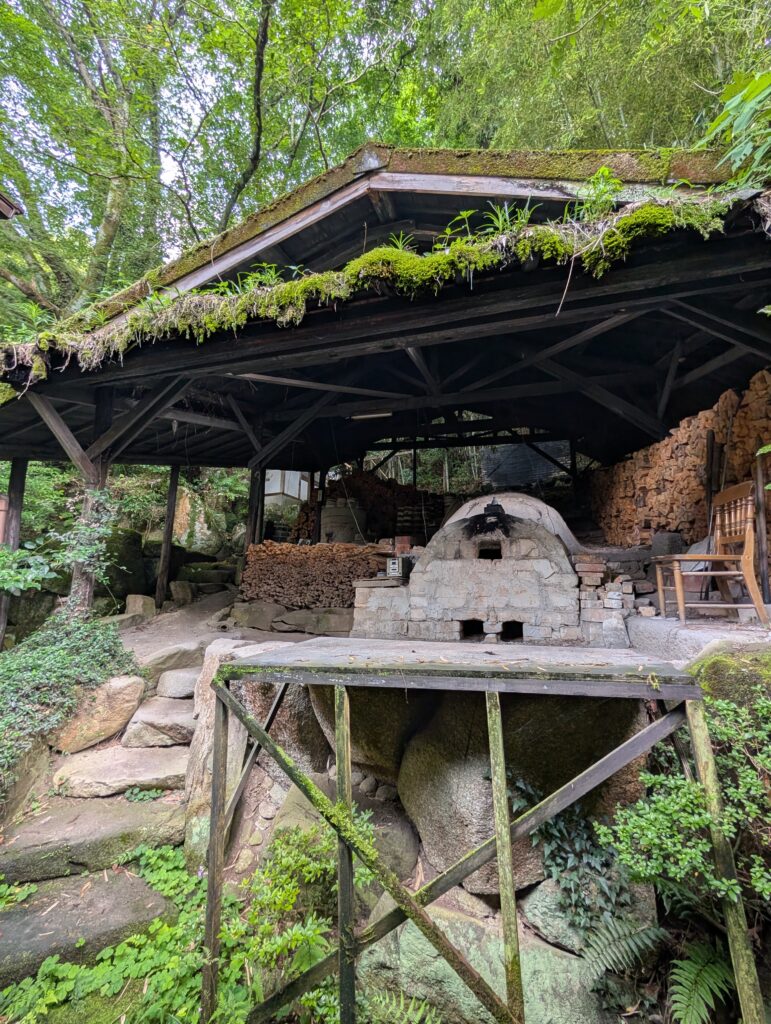
2. The Kobeigama Pottery is the working studio (or kiln as studios are referred to in Japan) of many generations of the Kato family, a lineage that includes several artists with national designations. Visitors are welcome to wander many beautiful areas including the main building gallery and collections, anagama kiln, and arts and crafts museum. The pottery was founded in 1804; the period architecture of the the gallery buildings and kiln is worthy of attention.
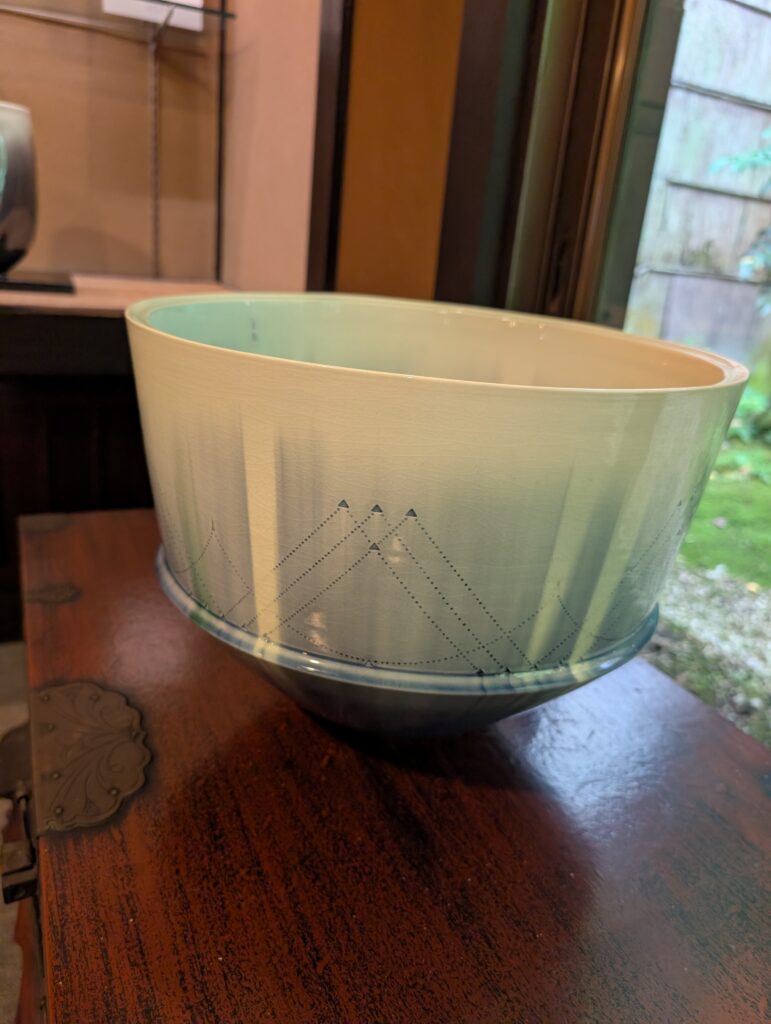
Favorite piece: Kobei Kato the seventh expanded upon his father’s restoration of celadon Chinese glazes called Sansai with the addition of a “rust” color, which reads black-ish purple to me. It’s seen pooling in the dotted mountain surface design of this pleasant bowl form.
If you visit: The Kobeigama Pottery is a short uphill walk from the Inchinokura Sakazuki Museum and you’ll pass by encroaching bamboo forest along the way. Mind the bus schedule if you’re using public transit like I was – they only run every hour or so in the countryside and there’s no shelter at the stop.
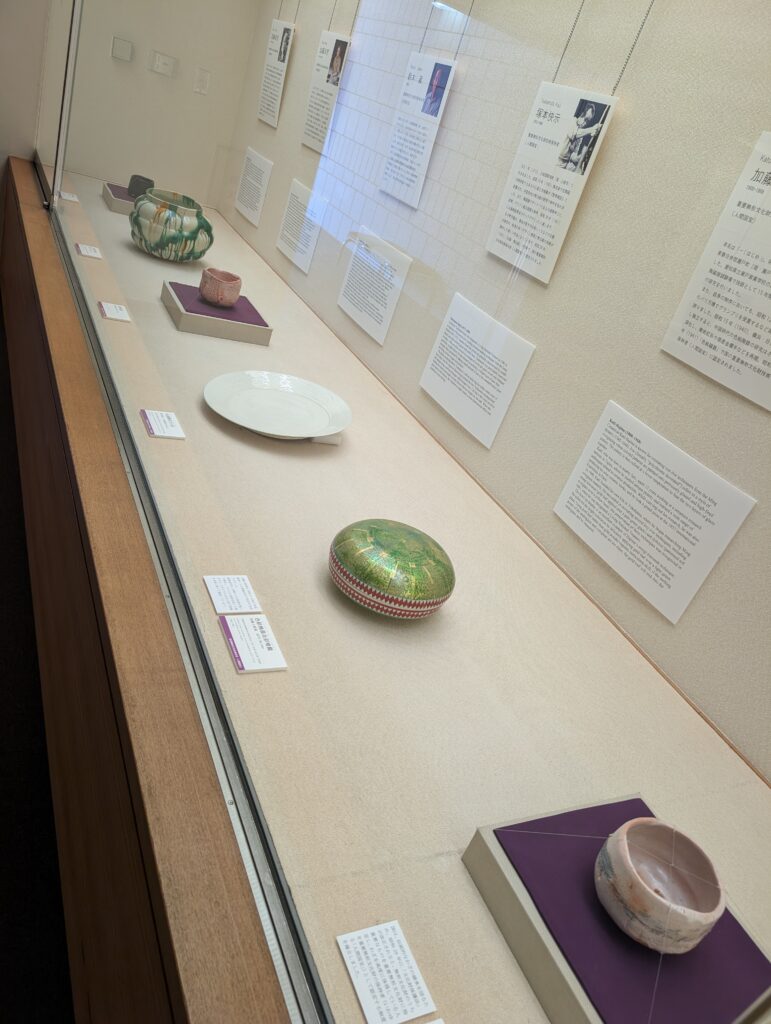
3. The Mino Ceramic Art Museum, also called Tajimi City Minoyaki Museum reminded me of my beloved Orton Museum of Geology at The Ohio State University: vast, important, well-described collections in dusty vintage 1960s-era displays. A permanent exhibit displays Mino ceramic styles in chronological order, concluding with works of master potters designated as Living National Treasures (though most are deceased). Other galleries featured local young artists and rotating exhibits.
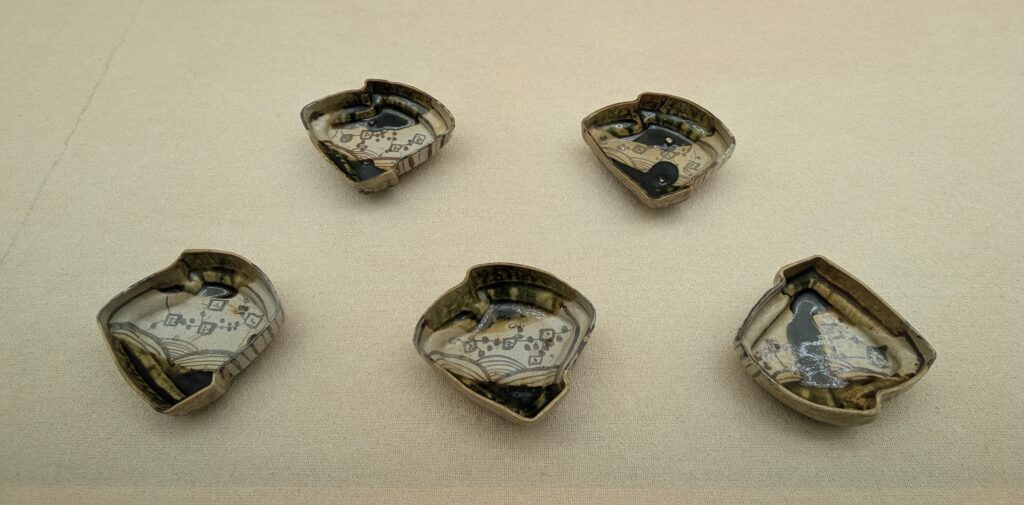
Favorite piece: This set of dishes exemplifies the Oribe design and glaze style I saw repeated throughout the Tajimi region. The funky shape, geometric line drawing, and organic dipped celadon glaze is appealing for its irregularity.
If you visit: Definitely pick up the English guide here. It describes the history and evolution of Mino ceramics in great detail and can serve as a primer for understanding ceramics featured at all other museums.
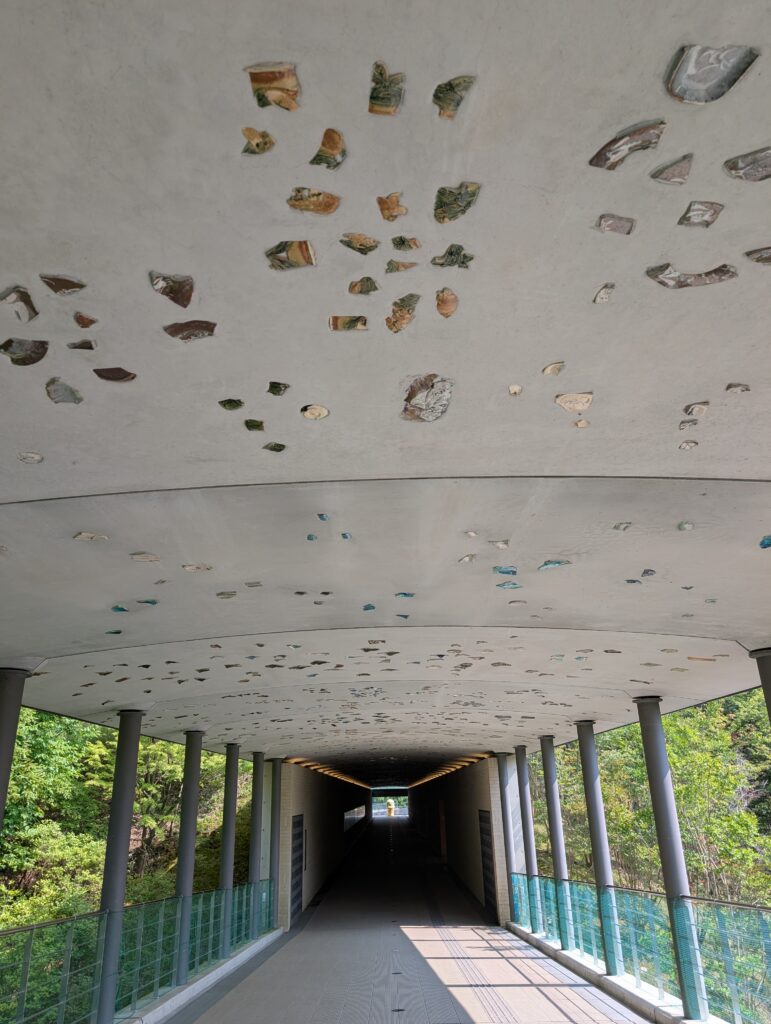
4. The Museum of Modern Ceramic Art is a part of Ceramic Park MINO, a beautiful modern architecture complex including meeting rooms, indoor and outdoor event spaces, and galleries. The museum’s architectural style is contemporary and includes modern earthquake resilience techniques.
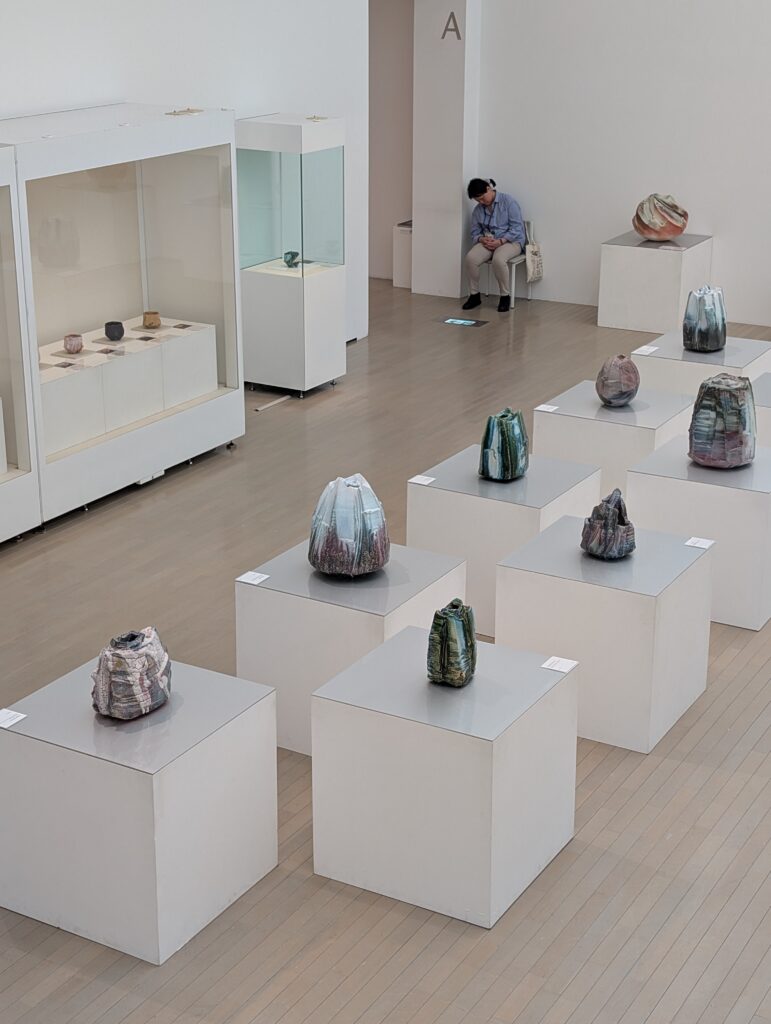
The rotating gallery featured the rough hewn vessels of Hayashi Shotaro. The exhibit included an enjoyable, lengthy process video showing how he throws, carves, and glazes in his unique shino glazes. His forms and snow-like glaze evoke mountains or rocks. An upstairs permanent gallery of modern ceramic pieces is unique in the area but didn’t include any notable works in my opinion.
If you go: The Modern Ceramic Arts Museum and Tajimi City Museum are near enough to each other and accessible from the same bus line to visit on the same day, if you’re up for a moderate amount of walking. Both have gift shops with artist-made works.
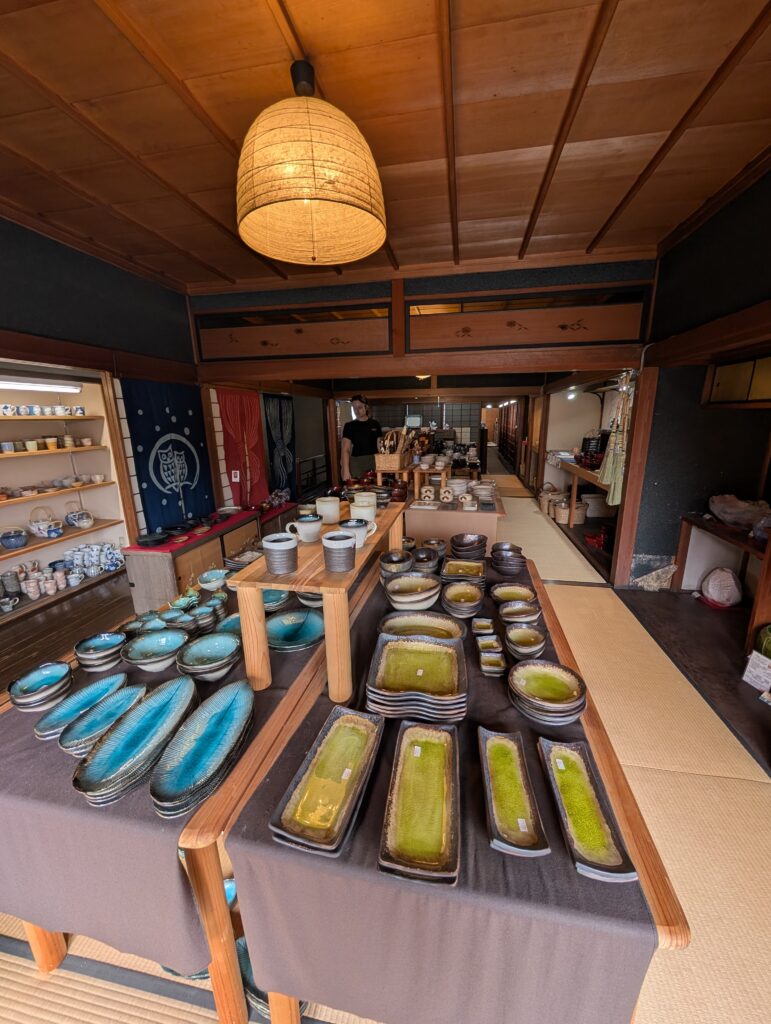
5. Honmachi Oribe Street, while not a museum, is a not-to-miss district in Tajimi filled with small galleries and shops. The shops sell ceramics and other local wares, including some artists featured in museums. Of the shops I visited with Lil, our favorite was Izutsu Shop because their large selection of interesting Mino ceramics, including some Hayashi Shotaro pieces, are housed in a traditional Japanese building complete with tatami mat floors and low wooden ceilings.
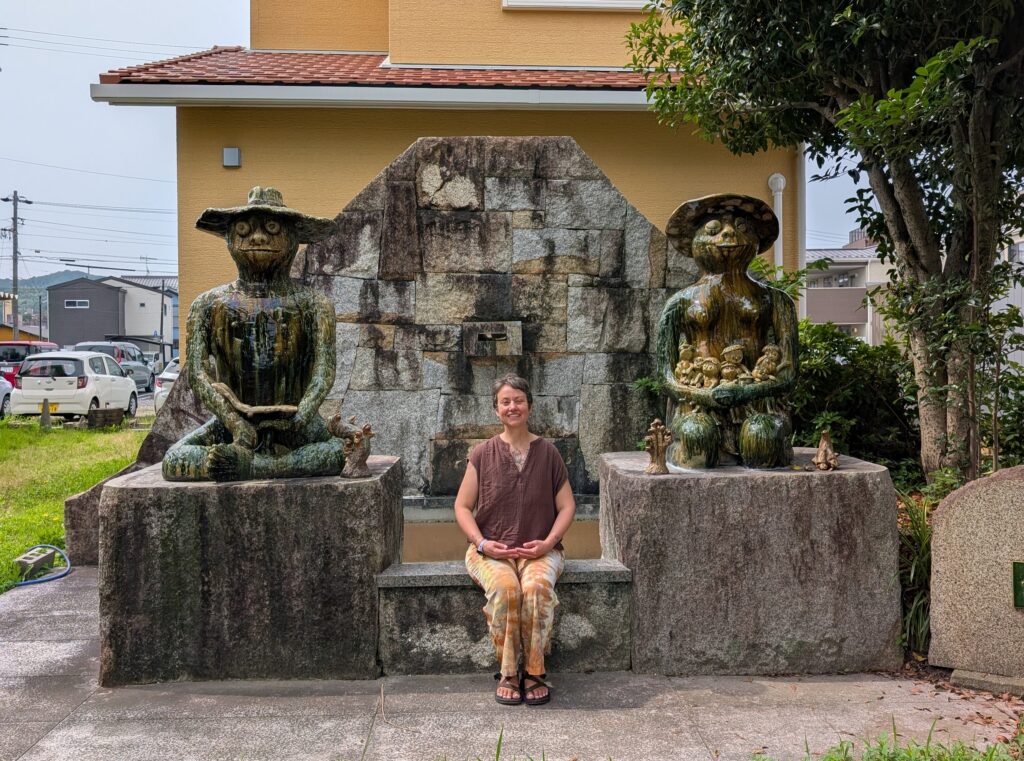
Walking around Oribe street, I enjoyed the many displays of public ceramic art. Some, like the fountain pictured above, feature the unagappa, a funky town mascot created as a blend of unagi (eel, the specialty food of the area) and the Japanese folklore ‘kappa’ character.
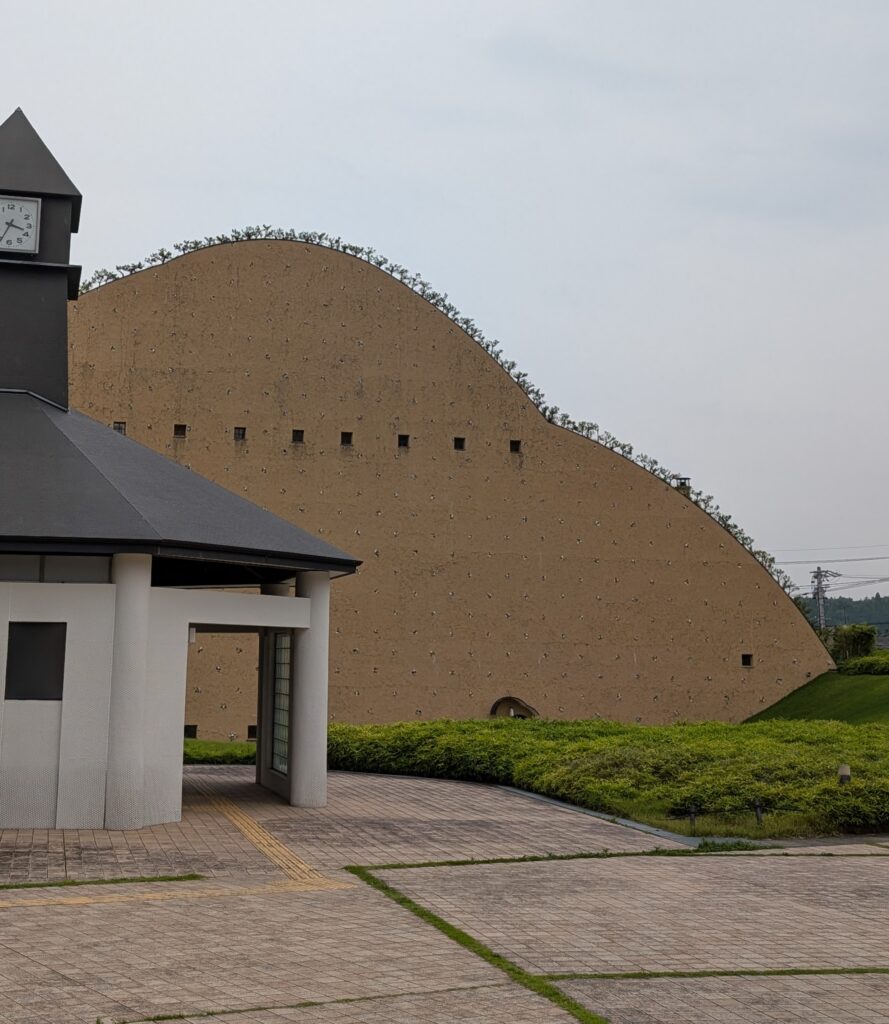
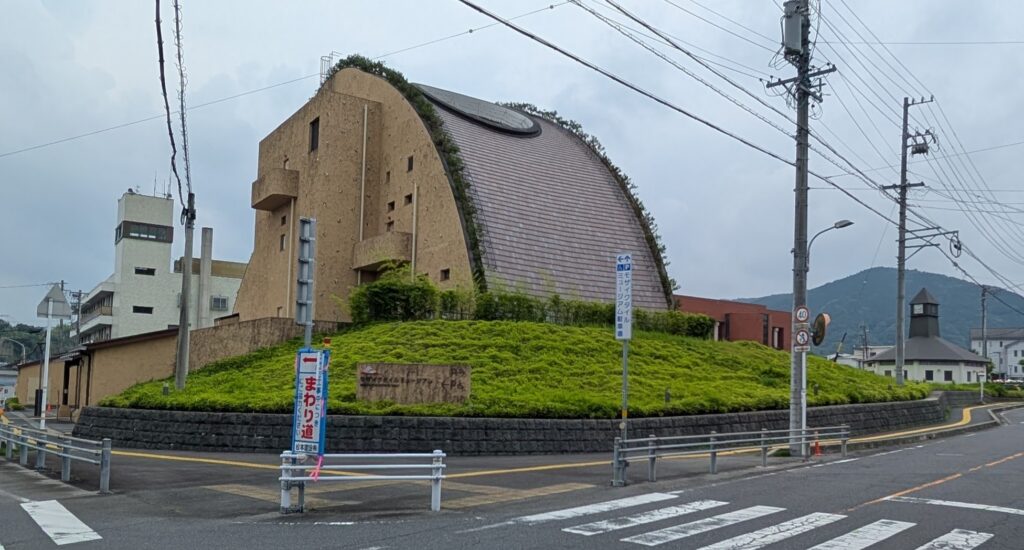
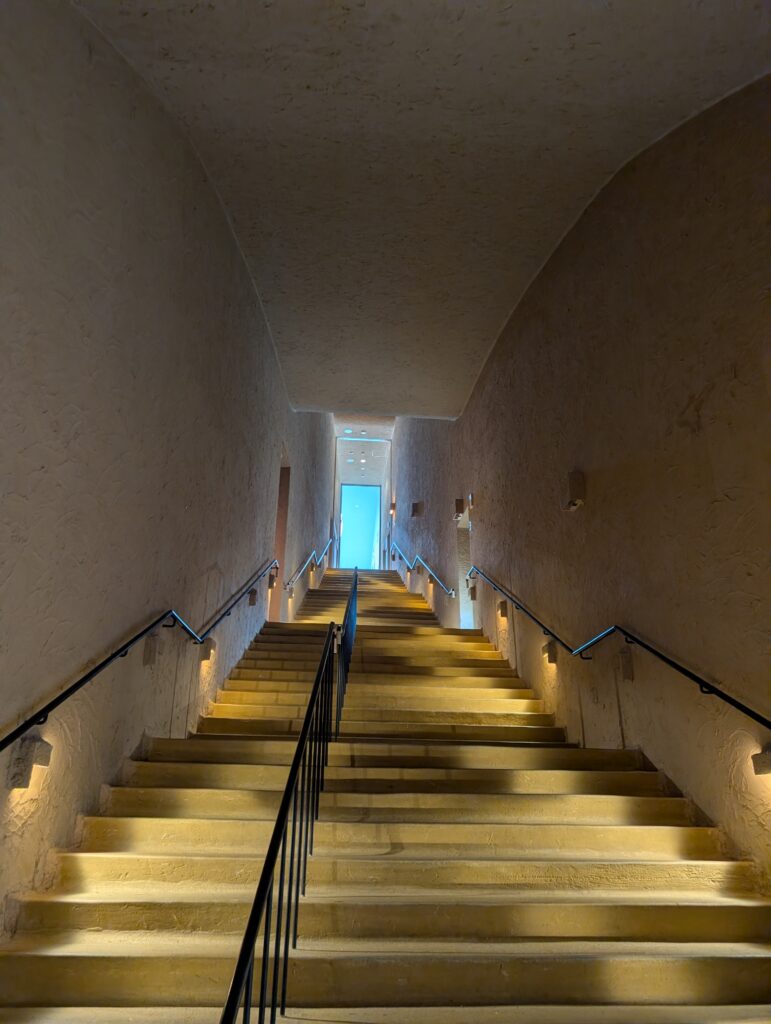
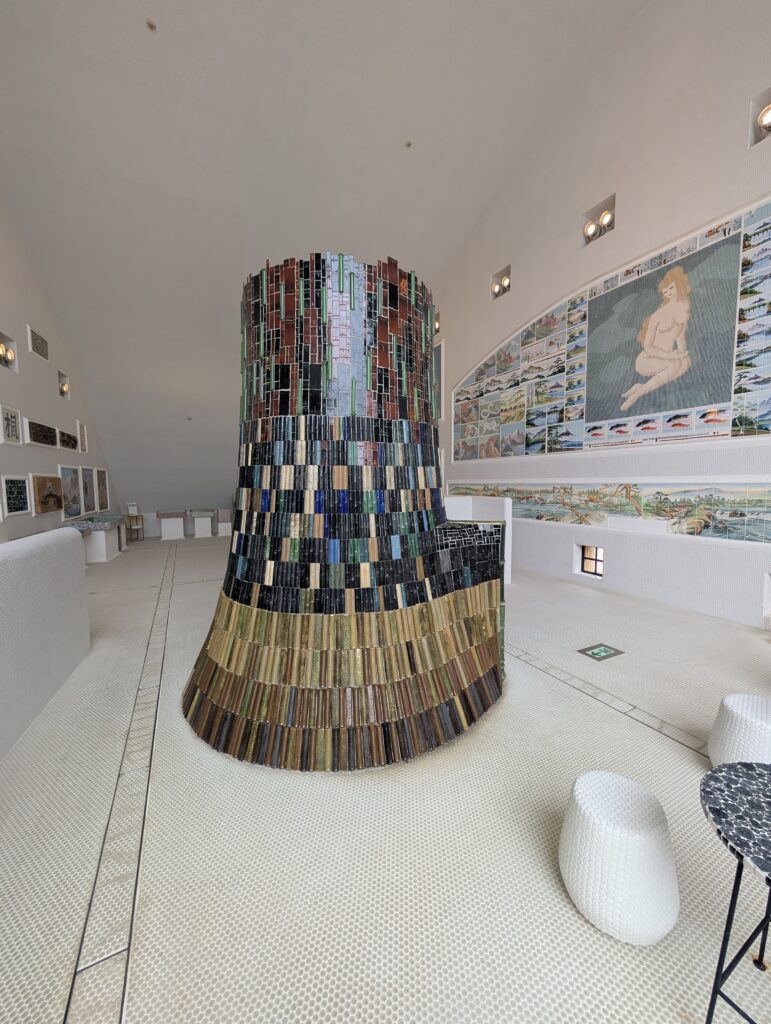
6. Avant-garde architect Terunobu Fujimori cleverly takes visitors to the Mosaic Tile Museum on a journey through the earth to consider the clay used in tile making. One enters the museum through a hobbit-like door in a dull brown hill structure. The entry way has no windows and guests are advised to walk up straw stuccoed stairs to the top floor to view galleries from the fourth floor downwards.
The fourth floor gallery is awash with natural light coming from a giant opening in the roof of the building. White tile on the floors and walls allow the vintage and modern tile collection to pop, and the whole floor is exposed to rain which drains out the back of the building. Other floors showcase vintage mosaic tiles and a modern tile showroom.
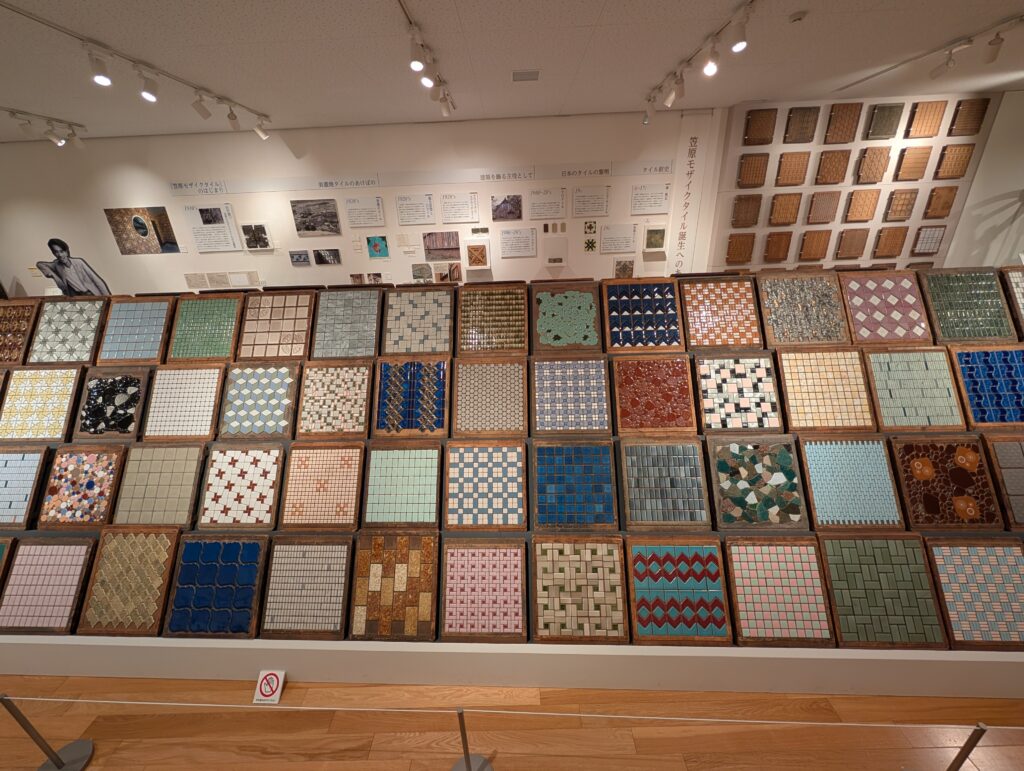
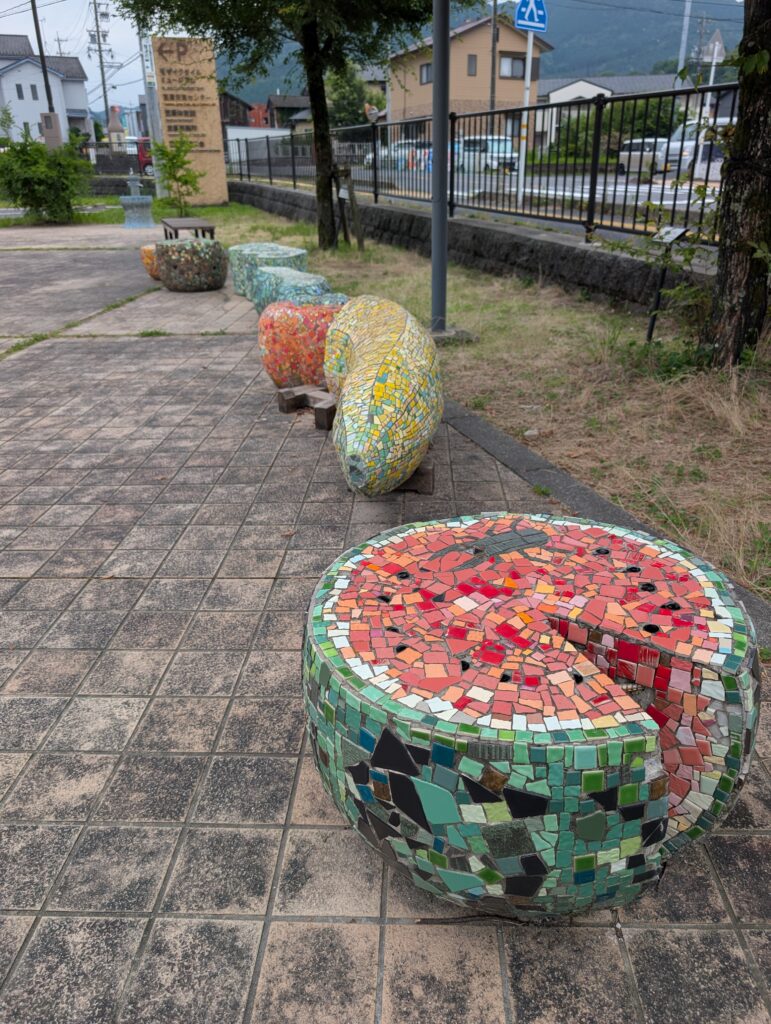
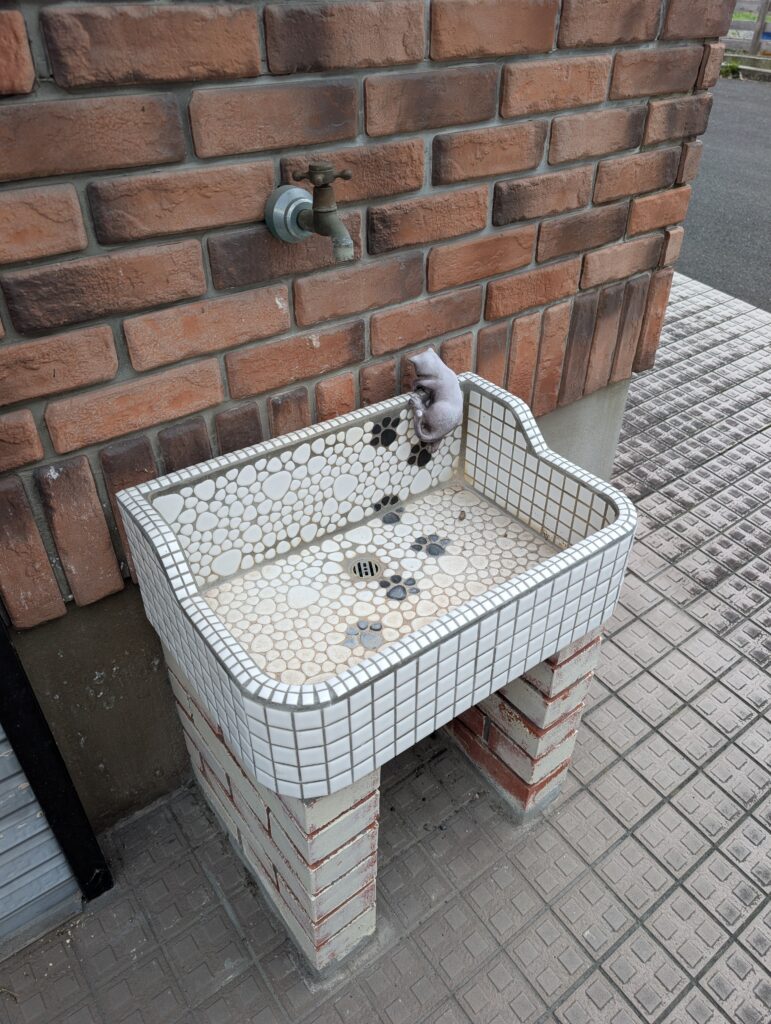
If ceramics are everywhere in Tajimi, mosaics are everywhere in the neighborhood of the Mosaic Tile Museum. I sat on the mosaic fruit benches, enjoyed mosaic signs in the convenience store, and saw an adorable outdoor sink decorated with cat print mosaic on my way to Michisakari, the local sake brewery a recommended short walk from the museum.
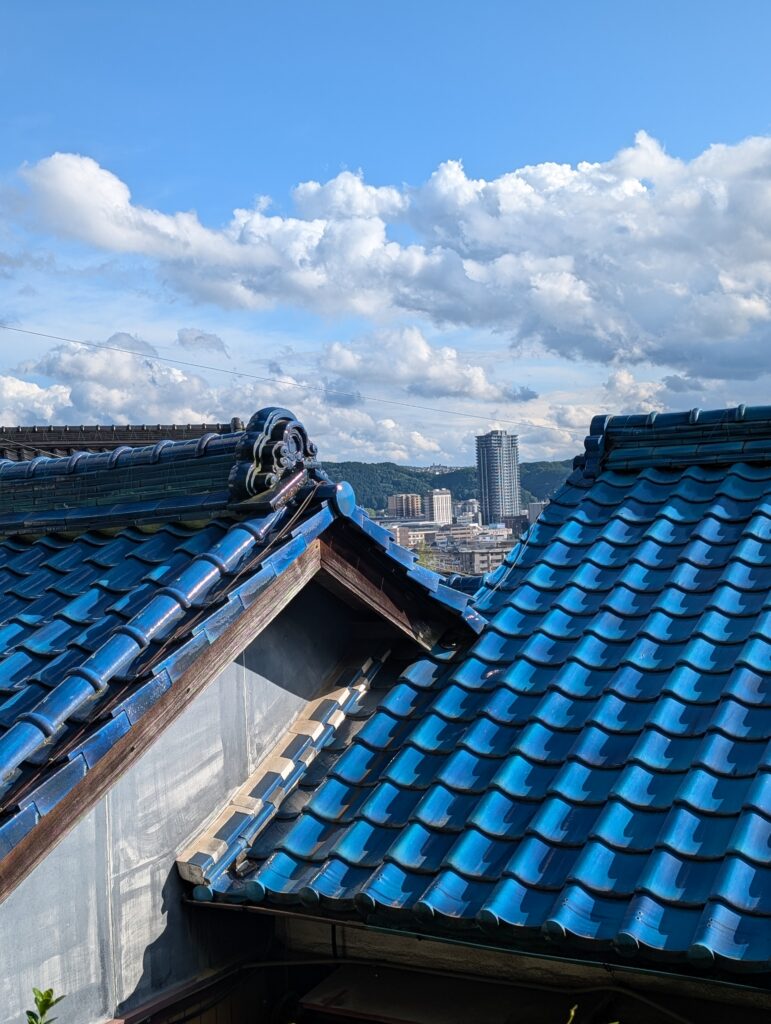
7. On a blistering humid day following many days of typhoon rain, I hiked up steep roads to Kokeizan Eihoji Temple and Toshin Mino Ceramic Art Museum. I so enjoyed the temple (built in 1313! ginko tree thought to be 700 years old! national treasure of Japan!) that I almost didn’t keep climbing to visit the museum, but this turned out to be the best museum of the trip.
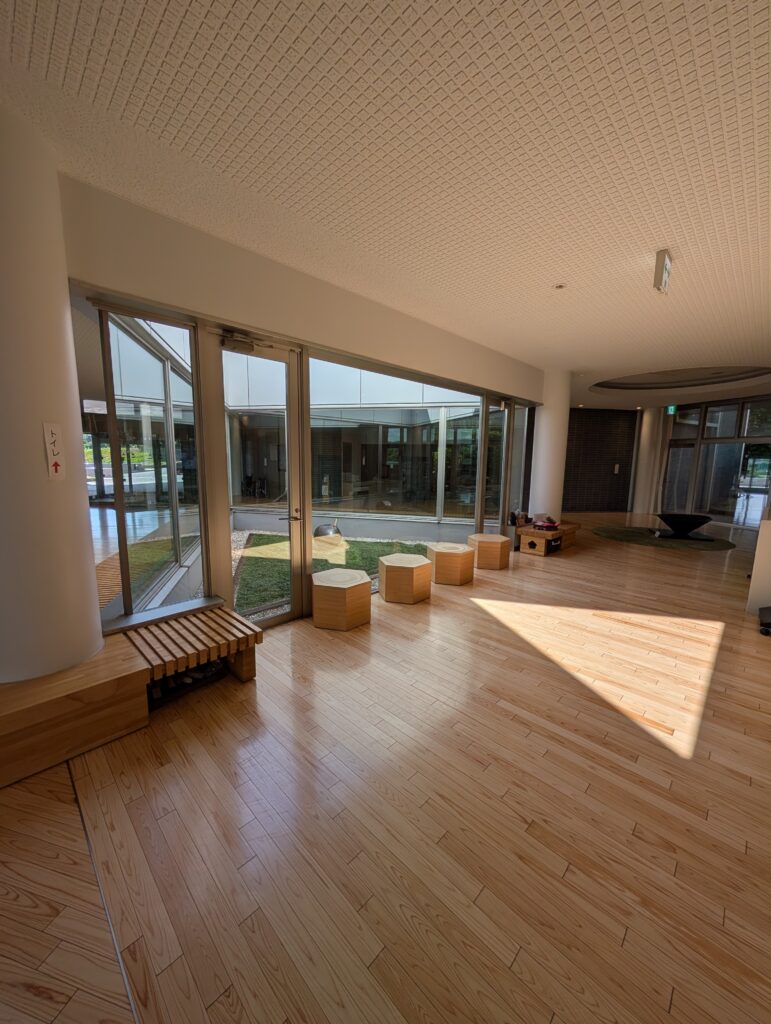
Once again, the architecture of the museum contributed positively to the experience. Toshin Mino Ceramic Art Museum is two round buildings, each containing an enclosed atrium. At afternoon when I visited, the sunlight created curious shapes and shadows on floors and walls.
As I wound through empty spaces and found the single exhibit, I was met with a hushed voice asking me to proceed in one direction for a reason I couldn’t quite comprehend with my limited Japanese language skills. I followed gestures and began viewing pieces in the round narrow gallery.
After awhile I heard footprints behind me and noticed I was being watched by an elderly man. We said nothing for a few moments and eventually I guessed that he was the featured artist, Yoji Sone.
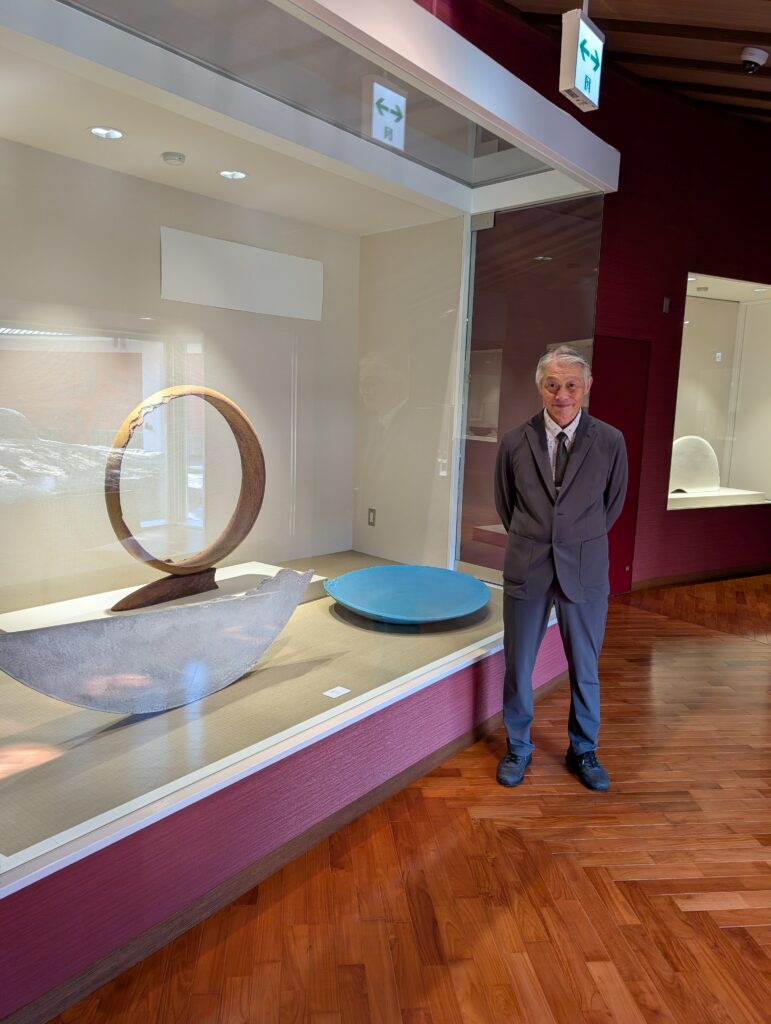
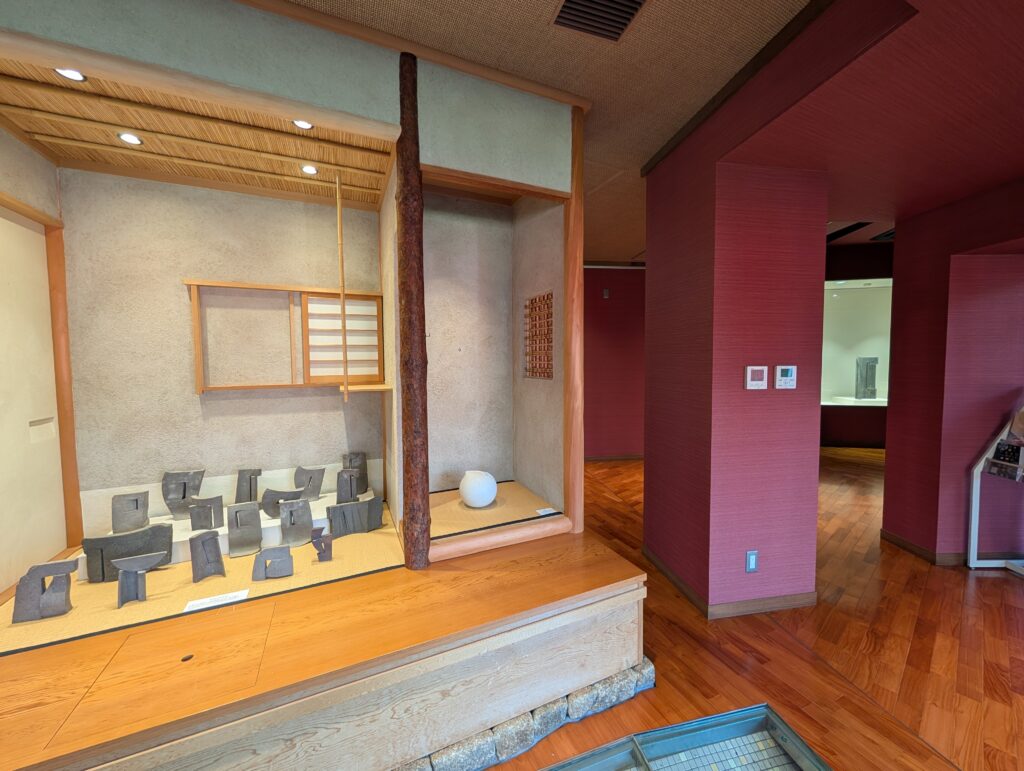
I happened to arrive on the first day of the solo exhibit installation and since no one else was visiting yet, Mr. Sone and I talked for fifteen minutes (through Google translate) about his large geometric sculptures. He showed me the display of small studies he made to experiment with balance and surface design.
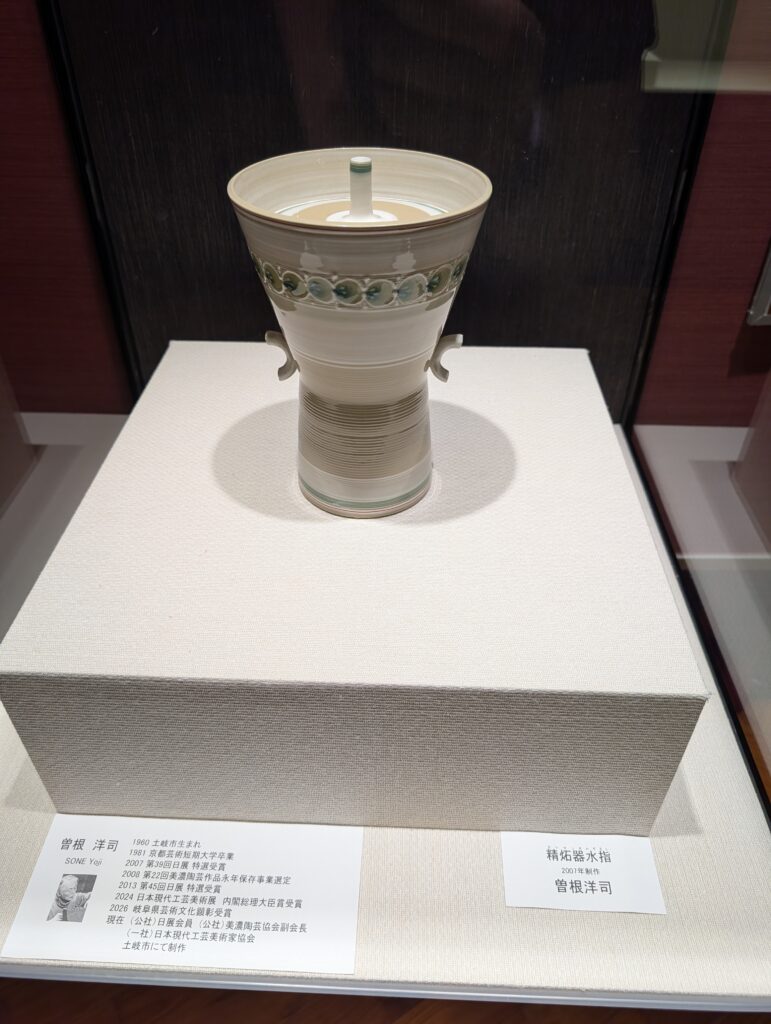
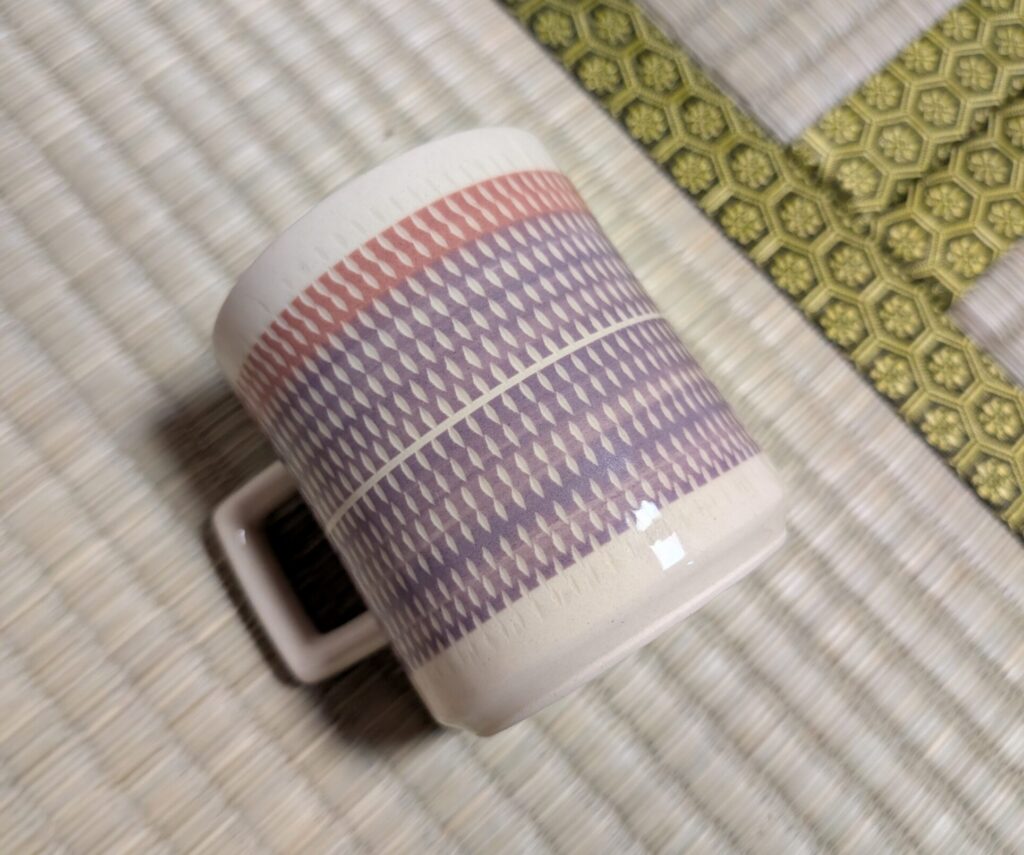
Mr. Sone was especially emphatic that I also see the small works, like the lidded jar decorated in a vintage slip trail style. I believe he and his studio are trying to revive this “seisekki” style in Japan. Though I didn’t plan on buying any ceramics on this trip, I ended up finding a small mug from his studio to commemorate meeting the artist.
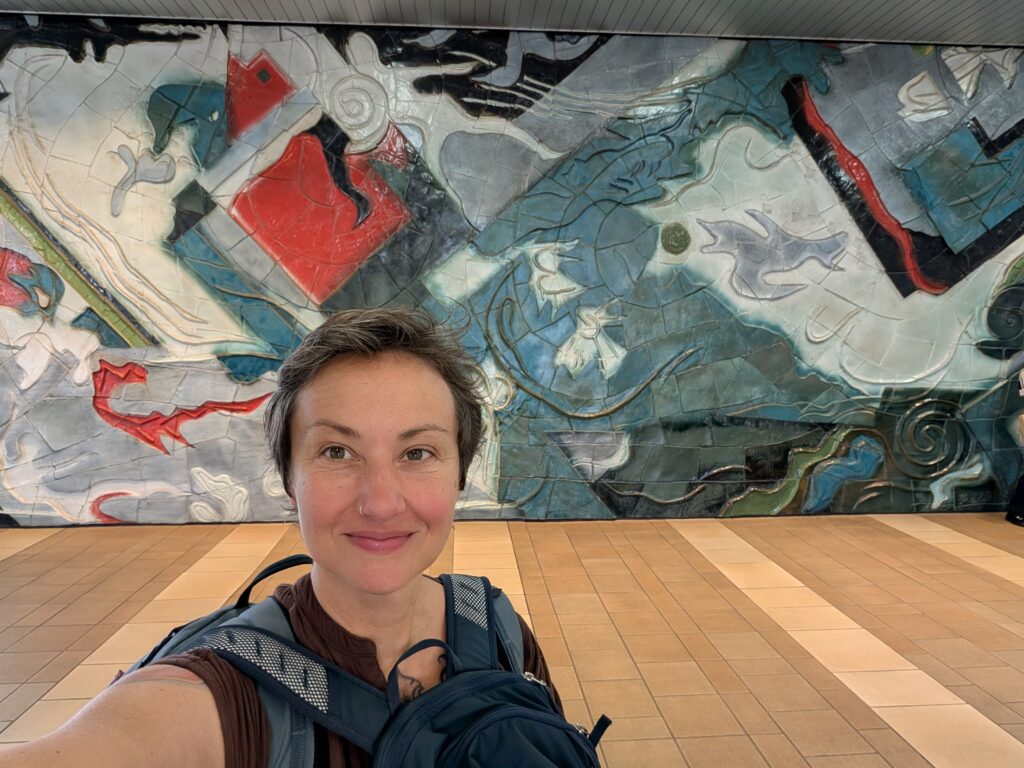
For visitors to Japan who appreciate art, ceramics, and architecture, I highly recommend Tajimi. The town is convenient to Nagoya’s large airports and there are plenty of restaurants and places to stay (like Kintsugi House, my incredible AirBnB) without the big city crowds. I could have stayed several more weeks to take in all that the Gifu region has to offer for a burgeoning ceramic artist and my studio is filling with pieces inspired by the trip.